ECEG Director General Eleonora Isopo: Europe’s competitiveness needs predictable regulation and long-term skills development

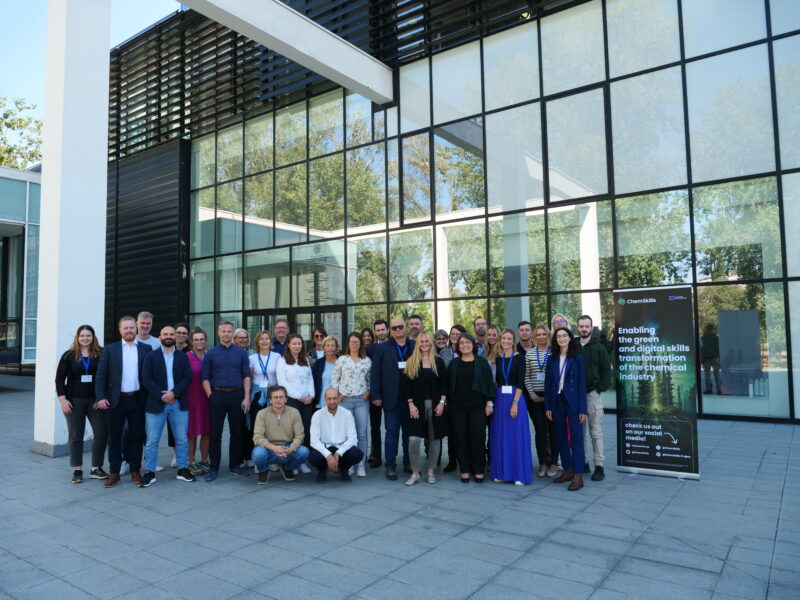
The Chemical Industry Federation of Finland welcomed this week Eleonora Isopo, Director General of the Brussels-based European Chemical Employers Group (ECEG), together with her colleagues, Chiara Foglio and Valentine Martin. During the visit, discussions focused on the increasing amount of EU labour regulation, business competitiveness and the future skills needs of the European chemical industry.
ECEG (European Chemical Employers Group) represents employers in the European chemical, plastics and rubber industries at EU level. The organisation works closely with EU institutions and trade unions, particularly on issues related to employment, skills and social policy.
According to Isopo, recent years have seen a clear shift in the amount of labour-related regulation being prepared at EU level.
– We have seen a large number of new labour initiatives and directives across many different topics. The risk is that the overall framework becomes fragmented and difficult for companies to anticipate, Isopo says.
Less overlapping regulation
According to Isopo, European industry above all needs a stable and coherent operating environment.
– Companies need regulation that is predictable and supportive of competitiveness. Before introducing new legislation, the impacts of existing regulation should be assessed, as well as whether there is a genuine need for new initiatives.
Isopo points to AI-related regulation as one example. Discussions have raised the possibility of new legislation in the use of artificial intelligence at work and algorithm management, even though there is already a comprehensive EU regulatory framework covering the issue, including the AI Act, GDPR and the Platform Work Directive.
The discussions also touched on the European Commission’s proposed Quality Jobs Act initiative. According to Isopo, the chemical industry takes the discussion on quality jobs seriously and positively, as the sector has long invested in safety, skills and working conditions.
– The chemical industry is, by many measures, one of Europe’s highest-quality employers. For us, safety, training and employee wellbeing are key priorities.
National differences must be recognised in traineeship initiatives
The long-discussed Traineeship Initiative was also raised during the visit. ECEG remains cautious about the initiative, particularly because traineeship systems are being regulated and vary significantly between EU member states.
– Education systems and traineeship models are very different across Europe. That is why we believe many of these issues should primarily remain within national decision-making, especially when it comes to traineeships in the field of education and training, Isopo states.
According to her, companies have indicated that excessively heavy administrative regulation could make it more difficult to offer traineeships.
– It would ultimately run counter to the objectives of the initiative if companies reduced traineeship opportunities because of regulatory complexity.
ChemSkills is building future skills
The visit also included discussions on the ECEG-led ChemSkills project, which aims to strengthen skills and training cooperation within the European chemical industry.
According to Isopo, the project’s greatest added value lies in bringing together the key stakeholders across the sector, from companies and educational institutions to social partners.
– The chemical industry needs new forms of cooperation right now. The green and digital transitions, labour shortages and demographic ageing are rapidly changing skills needs.
According to Isopo, the goal is not merely a four-year project, but a more permanent framework for developing European skills.
– We want to build something that continues creating impact even after the project has ended. This must not become just a “tick-the-box” exercise.
Anni Siltanen, Public Affairs Manager at the Chemical Industry Federation of Finland and Project Manager of ChemSkills, also sees the project as an important opportunity to strengthen the voice of European industry within the EU.
– It is great to be involved in building a framework that helps bring the needs of industry more clearly to the attention of the European Commission. People and skills are absolutely essential for ensuring that European industry can prosper in the future as well, Siltanen says.
According to Siltanen, ChemSkills also provides an opportunity to influence what the future European education and skills framework will look like.
– We need to ensure that projects leave a lasting handprint. It is important already now to consider how skills, companies and different projects can remain connected in the future.

Read next

Nominate an outstanding product development achievement – the Product Development Path Makers Award will be presented in December

Mikko Salo appointed CEO of Kemianteollisuus ry